
ECCB Newsletter May 2026

A NOTE FROM
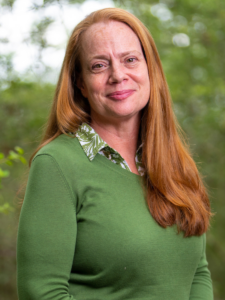
DR. GONDER
Howdy!
This spring has brought exciting momentum for the Department of Ecology and Conservation Biology.
Across our community, faculty, students and former students continue advancing research, teaching and conservation efforts that help us better understand and safeguard life on Earth.
Our department’s work spans the full spectrum of ecology, from the genetic foundations of biodiversity to the complex ecosystems that sustain our planet. Through this work, our students, staff and faculty remain deeply committed to protecting biodiversity, sustaining essential ecosystem services and stewarding natural resources in a rapidly changing world.
In this newsletter, you’ll see examples of that impact throughout our community. We celebrate faculty honors and research leadership, recognize outstanding student achievements and highlight a few of the discoveries and collaborations that continue to shape the future of ecological science and conservation.
What excites me most is the shared commitment I see every day across our department. We have a team of scholars, educators and students working together to expand knowledge, mentor future leaders and apply science in ways that benefit society and the natural world.
Thank you for being part of the ECCB community and for supporting our work.
Thanks, and gig’em,
Best regards,
Katy Gonder, Ph.D.
Professor and Department Head
[email protected]

Ecoinformatics graduate student explores nature through data and technology
Doctoral student Justinn Jones uses ecoinformatics, combining ecological science with advanced data analysis, to uncover patterns in nature and better understand ecosystems.
His work demonstrates how modern technology is helping scientists study biodiversity and ecological change in new ways.

Kirk Winemiller retires after 34 years of impact
Aquatic ecology researcher Kirk Winemiller, Ph.D., retired after more than three decades of contributions to research, teaching and mentorship at Texas A&M.
His work helped advance understanding of freshwater ecosystems while mentoring generations of students in ecological science.

ECCB students recognized at College of Agriculture and Life Sciences Convocation
Two students from the Department of Ecology and Conservation Biology were recognized during the 70th annual Convocation ceremony honoring leadership, scholarship and service.
Kai Miller was named as a 2026 Senior Merit honoree and Sidney Brueggeman was announced as a 2026-2027 College Ambassador. These recognitions highlight the leadership and academic excellence of ECCB students within the College of Agriculture and Life Sciences.

Five tips to prevent negative encounters with snakes this spring
As warmer weather brings more outdoor activity, Toby Hibbitts, Ph.D., instructional assistant professor in the department and research scientist with the Texas A&M Natural Resources Institute, shared guidance on how Texans can avoid snake encounters and reduce bite risks while respecting wildlife.
The story highlights practical safety tips and emphasizes the important ecological role snakes play in natural ecosystems.

ECCB student honored by Texas Society of American Foresters
Keira Mattson ’26 was recognized by the Texas Society of American Foresters for academic achievement, leadership and commitment to conservation.
The Outstanding Student Award recognizes emerging professionals dedicated to advancing sustainable forest management and conservation.

Sorin Popescu named Texas A&M AgriLife Research Faculty Fellow
Sorin Popescu, Ph.D., professor in the Department of Ecology and Conservation Biology, was recognized as a Faculty Fellow by Texas A&M AgriLife Research.
Popescu is an internationally recognized expert in lidar remote sensing and environmental data science, advancing the use of airborne and drone-based systems to study vegetation, carbon and ecosystem change.

Listening to nature — one bird call at a time
Student researcher Carmen Reisdorf ’27 developed a citizen science project that combines artificial intelligence, ecology and global volunteers to analyze bird calls and better understand biodiversity.
The project demonstrates how technology and public participation can support ecological research.

Carol Loopstra retires after 31 years advancing forestry genetics
Forest geneticist Carol Loopstra, Ph.D., retired after a distinguished career focused on advancing forest genetics research and educating future scientists.
Her research and leadership will have a lasting impact on forestry science and conservation.

Bradford Wilcox named AAAS Fellow
Ecohydrology researcher Bradford Wilcox, Ph.D., has been named a Fellow of the American Association for the Advancement of Science, AAAS, one of the world’s largest and most respected scientific organizations.
The distinction recognizes scientists whose research has made significant contributions to advancing science and its applications. Wilcox’s work has helped deepen understanding of ecohydrology.

Wu endowed professorship for teaching excellence
Ben Wu, Ph.D., has been awarded the R.H. Cintron University Professorship for Teaching Excellence, recognizing his dedication to student success and innovative approaches to teaching and mentoring.
Wu’s work has helped shape the next generation of conservation scientists while advancing ecological education across the university.

New field ecologist joins ECCB faculty
Felicity Newell, Ph.D., recently joined the department, bringing expertise in rainfall patterns, land use and biodiversity.
Her research combines global field experience with advanced ecological modeling to better understand how environmental change shapes ecosystems and conservation outcomes.

Briske honored for global rangelands scholarship
Emeritus faculty member David Briske, Ph.D., received special recognition for scholarship supporting the United Nations-endorsed International Year of Rangelands and Pastoralists. Two of his recent publications were recognized for their impact:
- Cambridge Prisms: Drylands Paper of the Year 2025 for It’s time to assign nonforested, nonagricultural lands a global designation.
- Frontiers in Ecology and the Environment: Top 10 Most Cited Papers in 2025 for Rangeland afforestation is not a natural climate solution.
These honors highlight Briske’s continued leadership in advancing global conversations on rangelands, land stewardship and sustainable ecosystems.
ECCB awards and recognition
The department will celebrate faculty, staff and student accomplishments at the 2025-2026 ECCB Awards Ceremony. These awards recognize excellence in research, teaching, mentorship and service across the department.
View awards at https://eccb.tamu.edu/awards/.
Graduate student honored at university awards event
Graduate student Breann Richey was recognized during the university’s Unsung Heroes Dinner and Dialogue, celebrating students who contribute significantly to the Texas A&M community.
Learn more at https://grad.tamu.edu/aggie-life/news/unsung-heroes-for-2026-honored-at-dinner-dialogue.
Sustainability leadership recognized
ECCB student Skyler Nix was honored with the Texas A&M Sustainability Champion Award during the Office of Sustainability ceremony on April 22.
The award recognizes students advancing sustainability initiatives and environmental leadership across campus.
Giving to the Department of Ecology and Conservation Biology
The Department of Ecology and Conservation Biology is preparing the next generation of scientists and leaders while advancing research that helps conserve biodiversity, sustain natural resources and address environmental challenges in a changing world. From genes to ecosystems, our faculty and students are developing knowledge and practical solutions that create impact in Texas and far beyond.
Your support helps expand student opportunities, fuel groundbreaking research and strengthen conservation efforts that benefit communities, landscapes and future generations.
About the Department of Ecology and Conservation Biology
The Department of Ecology and Conservation Biology brings together faculty, staff and students dedicated to advancing biological discovery, ecological understanding and real-world solutions that promote biodiversity conservation, environmental health and sustainable natural resource management. Our work spans the full spectrum of ecology, from genes to ecosystems, with research and impact reaching from Texas landscapes to global environments.